
To contribute to solving the problem of limited access to safe sanitation in small towns of Tanzania, WISE-Futures Centre is facilitating local government authorities with Citywide Inclusive Sanitation (CWIS) planning process. CWIS is a paradigm shift from the conventional approach or ‘business as usual’ to urban sanitation. It emphasizes planning along the entire sanitation service chain – capture, storage, emptying, transport, treatment, and reuse.
To raise awareness and understanding of CWIS among town authorities, WISE-Futures organized a learning visit to Shinyanga Faecal Sludge Treatment Plant (FSTP). Representatives of 5 small towns in the south of Tanzania: Mafinga, Namanyere, Ifakara, Ludewa and Makete participated in the learning visit. Participants were taken through the technology selection, construction, and operations.
After visiting Shinyanga, the centre organized a 3-day informed choice meeting in March 2023. The meeting was organized to guide local government authorities and utilities towards strategic evidence-based selection of Faecal Sludge Treatment Plant (FSTP) and Re-use Options that meet their cities’ sanitation context. The informed choice meeting was attended by 21 local government officials from Namanyere and Mafinga towns, five officers from the Ministry of Water, Health, and other government institutions working on water and sanitation, and private investors.
During the workshop, WISE-Futures team presented results of the sanitation assessment of Namanyere and Mafinga towns, highlighting the dominant type of sanitation facilities (user interface and containment), hygiene status and faecal sludge management using a faecal sludge flow diagram (SFD). Participants also agreed to use the data to plan for improved access to inclusive city-wide safe and hygienic sanitation. Participants were able to discuss and agree on what they want for their town. Each town identified the type of sanitation facilities they want (minimum standard), selected suitable FSTP options, and identified land/site for construction of the selected FST plant.
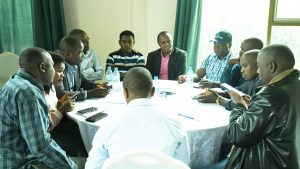
 “Local government authorities discuss sanitation options for their towns.”
They also identified actors and assigned responsibilities for each actor throughout the sanitation service chain, i.e., how to improve emptying, transportation, treatment, and disposal/reuse. The participants also defined land ownership and planned ways to secure the selected lands and how to implement the agreed targets. The towns agreed to promote public-private partnerships, allowing the private sector to be more on the service provider business and the government on the regulatory side.
Speaking during the closing of the Workshop, Chairperson Mafinga Town Council, Mr. Regnant Kivinge, thanked WISE-Futures, who organised the workshop and the funder for selecting Mafinga town to be part of the project. The chairperson added,” this project is going to improve the town and keep it a clean state in which it will completely reduce diseases.”
On the other hand, Eng. Loishiye Ngotee, from the Ministry of Water, applauded the WISE-Futures team for engaging the project beneficiary in implementing the project and urged town officials to work on the resolutions and continue to cooperate with the MUM project to assist the government in improving the sanitation and hygiene situation in their town.
The facilitator of the workshop Dr. Francis Moyo from WISE-Futures thanked all participants for their constructive engagement in the workshop, also the commitment to solve sanitation challenges in their respective towns.